Numbers are a big part of the preschool years - learning to count, read and write, and understand 1:1 correlation. The great part is that all of this learning can be fun! Enjoy the following ideas play-based activities and picture books.
Teaching preschoolers to write numbers is all about building confidence and developing fine motor skills in a fun, hands-on way. Begin with a few numbers at a time - 1 to 3, 1 to 5, 1 to 10. It is very normal for preschoolers to confuse the teen numbers.
For younger children ages 1-3, writing on traditional handwriting worksheets isn’t age appropriate because fine motor skills are still developing. Instead, tactile numbers offer a playful, sensory way for the child to learn the correct formation of numbers. Feeling and tracing these raised numbers helps the child remember how each number is shaped while making learning interactive.
As children move into the pre-k, tracing handwriting activity sheets are introduced to begin formal writing. In the 4 Year Curriculum, these sheets give the child guided practice while reinforcing proper number formation. By the 5 Year Curriculum, the child takes handwriting further by writing both numbers and words, building the fine motor strength and control needed for confident writing in kindergarten.
To make learning numbers even more memorable, Number Rhymes are included throughout the ABCJesusLovesMe Curriculum. These rhymes provide a fun, verbal way for the child to connect the shape of the number with its name and sequence. Combining tactile practice, tracing, and playful rhymes ensures the child develops both the skill and confidence to write numbers correctly.
See specific ways to teach the formation of numbers while improving fine motor, furthering creativity, using scissors, having fun with play dough, and improving critical thinking.
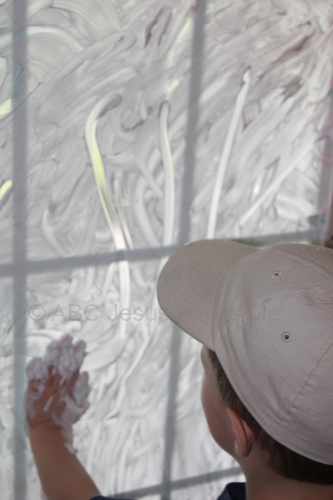
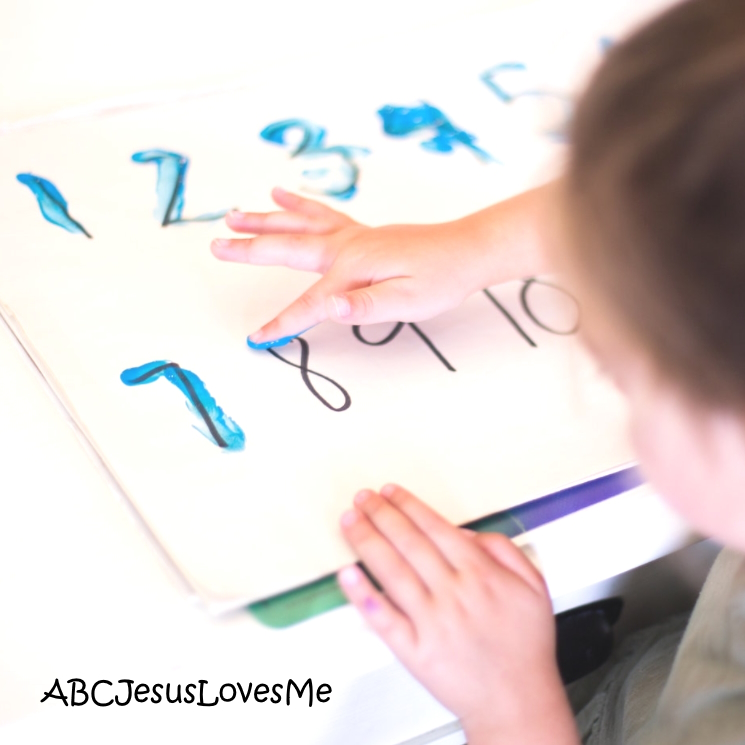
Especially for younger children, fingerpaint and shaving cream allows the child to draw a number without holding a writing utensil. Write the number on a piece of paper. Let the child correctly trace the letter with fingerpaint.
Or place shaving cream on a window or in a shallow pan. Ask the child to form the number in the shaving cream. Read more...
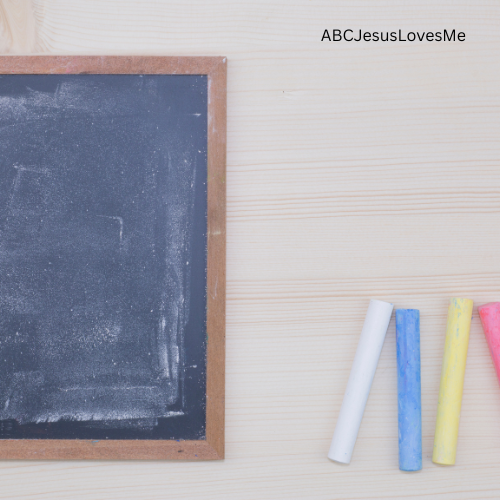
Write a number on a dry erase board or chalkboard. Have the child trace it with correct formation (top to bottom, left to right) to erase it.
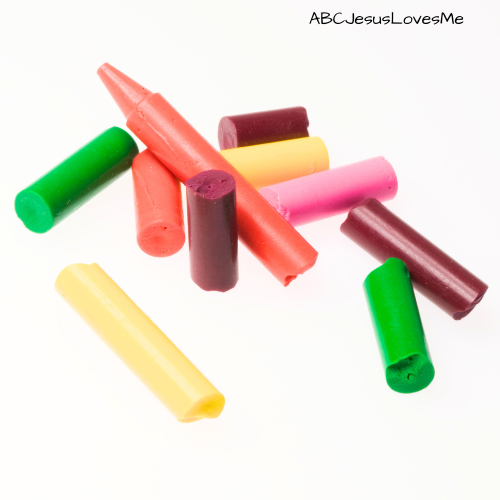
Write a large (2-3") number on paper. Have the child trace over it with a broken crayon or short pencil.
Write ¾ of a number. Ask the child to complete it.

Practice writing numbers on an Aqua Doodle or Magna Doodle.
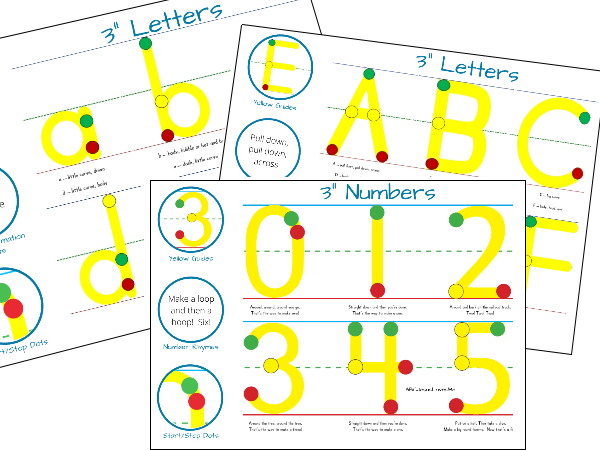
Build strong handwriting, phonics, and number skills with ABCJesusLovesMe’s supplemental tools. The 3" Uppercase and Lowercase Letters and Number Printables provide extra support for the 3 Year Curriculum, while the ABC Letter Posters teach recognition and correct formation through a fun, multi-sensory approach. Complete the set with vibrant Number Posters featuring rhymes, apples for counting, and engaging visuals to make early numeracy skills come alive. Perfect for both classrooms and homes, these resources make learning interactive, effective, and fun.
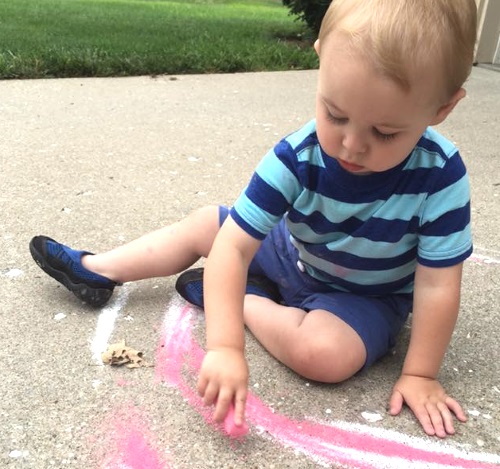
Write large numbers outside with chalk. Walk the numbers in the correct formation. Trace over the numbers. Spray the numbers with a water-filled spray bottle.
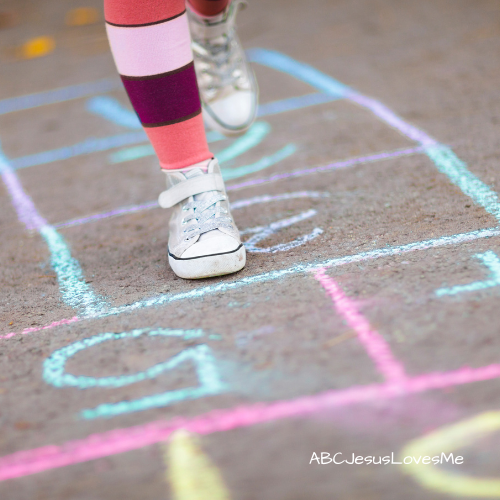
Write or lay numbers on the floor (e.g. hopscotch, sidewalk chalk, paper plates). Have the child hop on them in order.

Write numbers on papers or paper plates on the floor. Toss a bean bag and say the number it lands on.

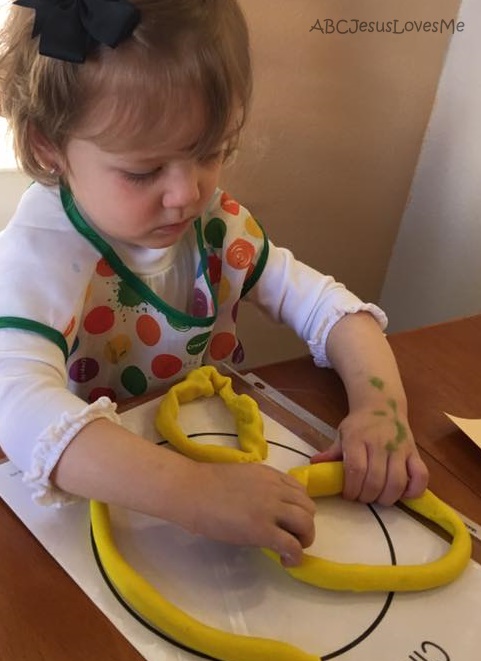
Form numbers using play dough, pipe cleaners, fingers, food, or body movements.
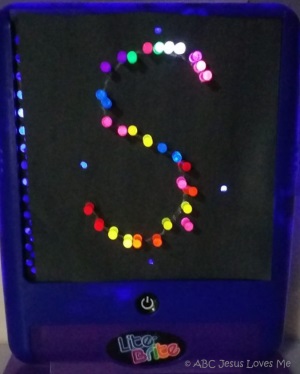
Write a number on a piece of construction paper the size of the LiteBrite screen. Have the child place pegs in the proper order (top to bottom, left to right) to form the number. Turn on the light for a fun surprise.

Place a piece of string on dark construction paper to form a number. Leave in sunlight for a few hours and remove the string to see the sun-print number.
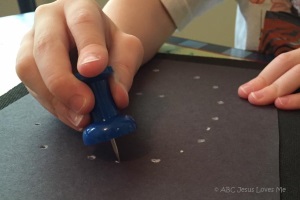
Write a large number on a piece of paper. Place the paper on a soft surface, such as styrofoam, cork, or a cardboard box. Have the child use a large push pin to poke holes along the outline of the number, following the correct stroke order (top to bottom, left to right). Hold the paper up to a window to see the light shine through the "glowing" number.
Discover a variety of holiday activities that keep Jesus at the heart of your celebrations! From crafts to family traditions, these ideas will help you create meaningful moments for your family or classroom that focus on the true reason for the season.

Lay number flashcards on the floor or table. Give the child a clean fly swatter and call out a number to swat. Remind the child to swat once and hold the swatter down.

Use number cards to play Go Fish. Ask, “Do you have the number ___?”

Write numbers twice on index cards. Cut apart and play Memory.
Create paper fish with numbers or use magnetic numbers. Create a fishing pole with a dowel rod, string, and a large magnet. Catch a fish and say the number.
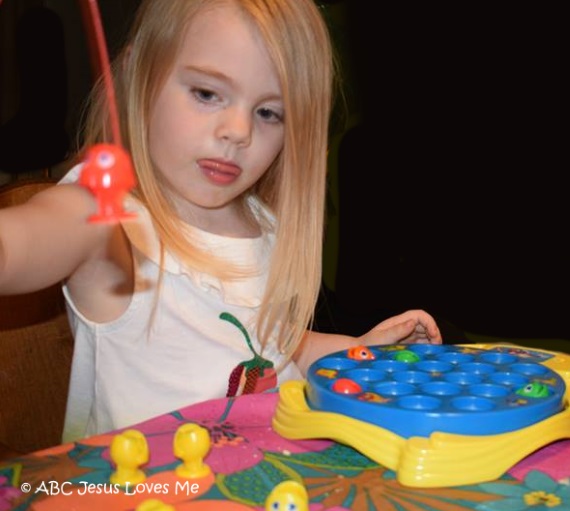
With a wet-erase marker write a number on the bottom of fish in a Let's Go Fishing game fish. As the child catches a fish, turn it over and name the number on the bottom.
Draw a number on the child’s back and have the child guess it. Take turns.
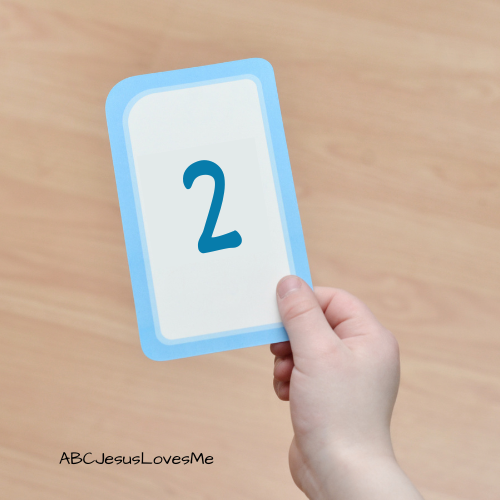
Place flashcards or index cards with the numbers 0-6 in a bag or basket. Have your child pull out a card, say the number aloud, and then perform an action that many times. For example, they could frog jump three times, spin around twice, or run to the kitchen four times.
Place paper over sandpaper numbers. Color with broken crayons to reveal the number.
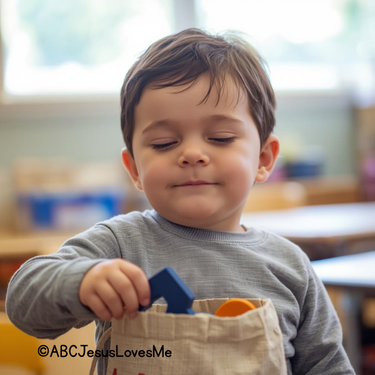
Place magnetic numbers in a bag. Have the child pull one out and name it. For a challenge, guess by feeling it.
Watch a child confidently learn through engaging, hands-on activities in the ABCJesusLovesMe Preschool Curriculum. With a focus on both academics and biblical values, this program nurtures development in every area, all while making learning fun. Click to discover how we can support a child's educational journey!
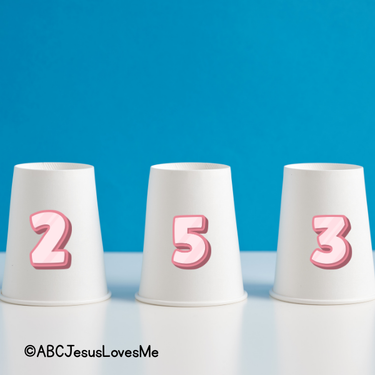
Write numbers on upside-down cups. Hide a coin under one cup. The child guesses the number where the coin is hidden.
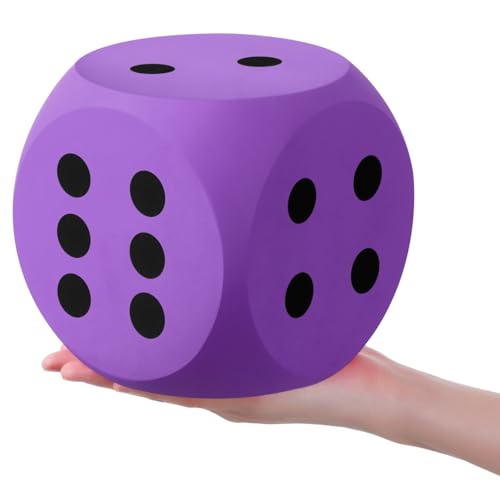
Roll a large dice. Run to the dice and count the dots.

Write numbers on small cups. Fill each cup with the matching number of objects (Cheerios, buttons, coins).
Lay numbers on the floor. Place the correct number of tokens or coins on each number.
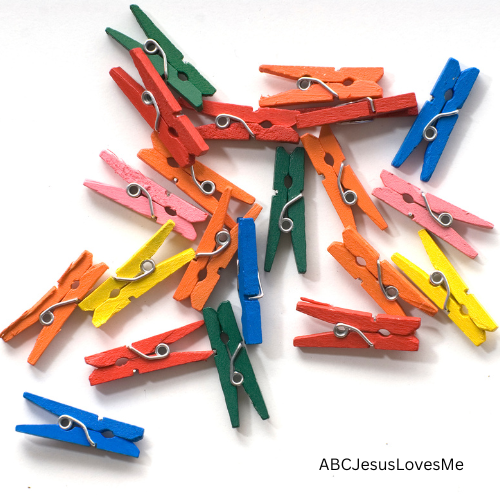
Write numbers on clothespins. Clip them onto a string or cardboard in order. This is a wonderful fine motor activity as it utilizes the pincher grasp.
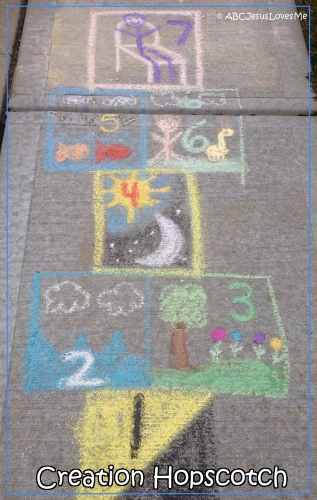
Gensis 1 provides a beautiful opportunity to teach children number 1-7, along with topics of the sky, plants, animals, and people. Enjoy a plethora of Creation activities on the ABCJesusLovesMe website.
Count Stairs
Count steps as you go up or down.
Elevator Numbers
Find and press the correct floor number.
House Numbers
Look for and read house numbers when outside.
Telephone Numbers
Let the child dial a phone number.
Cooking Counts
Ask the child to gather items in specific amounts (3 crackers, 2 onions, etc.).
Number Tokens
Juice lids or milk caps with numbers written on them make great game pieces or learning tools.
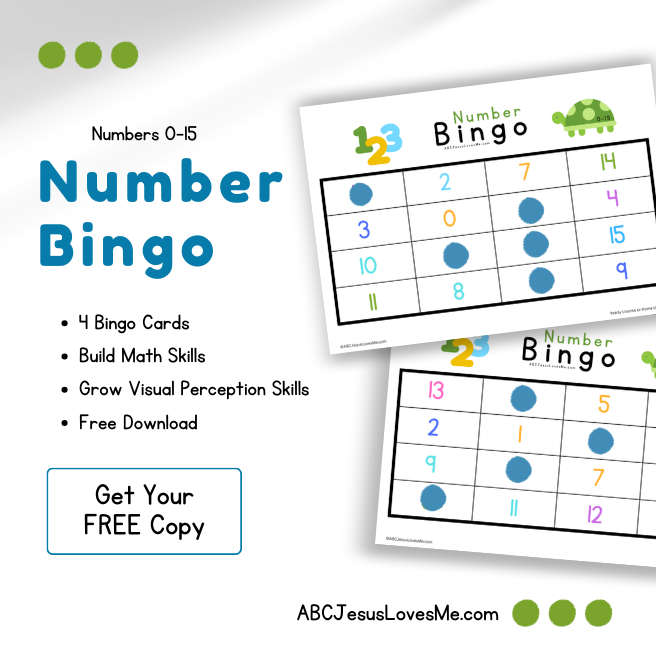
Make number learning playful with Numbers 0–15 Bingo. The child practices recognizing and naming numbers while enjoying a simple, engaging game. Click the link below to grab the download the free cards and begin playing.

How Do Dinosaurs Count to Ten? by Jane Yolen is a fun and interactive counting book that features a variety of dinosaurs learning to count from one to ten. As the dinosaurs go through different activities, they count objects, actions, and creatures in a playful, engaging way.
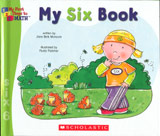
In the Jane Moncure My First Steps to Math books, children are introduced to “Little _” and learn about his or her home, which has a specific number of rooms that matches the focus number. As Little _ goes on a walk, he or she finds various items along the way. Children are encouraged to count these items as they appear in the story. Each book concludes with Little _ drawing the featured number and writing the number word, helping children connect counting, number recognition, and number writing.

The Three Little Pigs is a classic folktale that has been retold by various authors, each adding their own unique twist. The story follows three pigs who each build a house—one of straw, one of sticks, and one of bricks—to protect themselves from a hungry wolf. As the wolf blows down the first two houses, the third pig’s brick house withstands the huffing and puffing. This timeless tale teaches lessons about hard work, perseverance, and the consequences of taking shortcuts.

Five Little Speckled Frogs is a popular counting song and story that has been illustrated by various artists. The story features five frogs sitting on a speckled log, eating some most delicious bugs. One by one, each frog jumps off the log into the water, and the count decreases, helping children practice subtraction and counting. With its catchy, repetitive lyrics and vibrant illustrations, this story is a fun and educational way for young children to learn numbers, counting backwards, and enjoy the playful antics of the frogs.

Another fun book by Mo Willems, The Pigeon Won't Count to 10! shares the story of determined Pigeon who comes up with ten reasons he won't count to ten.

Ten Little Fish by Audrey Wood is a lively and engaging counting book that follows ten little fish as they swim through the sea, one by one disappearing until only one is left. Each page introduces different sea creatures, with the fish swimming away for various reasons, such as being eaten by a bigger fish or swimming to the bottom of the ocean. The rhythmic, repetitive text and vibrant illustrations make it a fun way for young children to practice counting down from ten while learning about ocean life.

Rhyme and count to 10 with Sandra Boynton's characters in One, Two, Three!

Five Little Monkeys Jumping on the Bed by Eileen Christelow is a beloved, rhythmic story about five mischievous monkeys who can't resist jumping on the bed, despite their mother's warnings. One by one, they fall off and bump their heads, leading to repeated calls to the doctor, who sternly advises, "No more monkeys jumping on the bed!" With its playful repetition, lively illustrations, and catchy rhyme, this book is perfect for teaching counting, sequencing, and the consequences of not listening! Kids will love joining in and chanting along with the familiar refrain.

The Very Hungry Caterpillar by Eric Carle follows the journey of a small caterpillar as he eats his way through a variety of foods over a week's time. Starting with one apple and gradually increasing his intake, the caterpillar's appetite grows until he transforms into a beautiful butterfly. This classic story contains repetitive text, a focus on counting, days of the week, and the life cycle of a butterfly.