
Child saying nursery rhymes

Preschool Nursery Rhymes

Traditional poems and nursery rhymes with actions help children develop rhyme, fine motor skills, phonemic awareness, and rhythm, all of which are key for pre-reading development. The ABCJesusLovesMe 1-5 Year Curricula include a nursery rhyme or fingerplay in each weekly lesson plan to focus on the beginning and ending sounds of words. Check out the fun poems below and bring these valuable learning tools into a child's day!

Preschool Nursery Rhyme List

Help the child by performing the actions to the poems and reciting them slowly at first so they can learn the words accurately. Repeat the poem throughout the day—while driving, before meals, during line-up, or even in the bathtub or while washing hands. Simple motions are included with some poems to engage children in the rhyme and enhance their learning experience.

In the videos, the nursery rhyme is read or sang very, very slowly to give young children time to listen, process the words, and participate. Children may not say every word right away. With repetition, they can gradually join in as they become familiar with the rhyme.
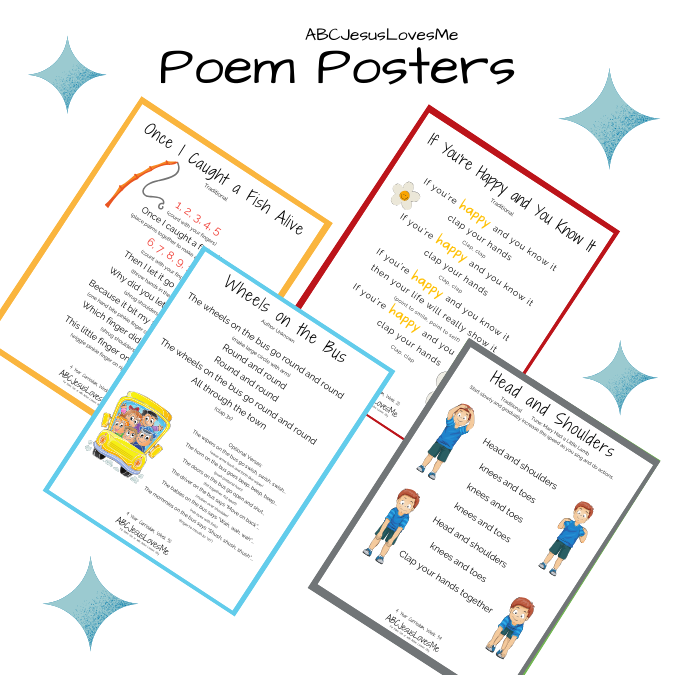
Poem Posters

Jumpstart Pre-Reading Fun with Engaging Poems! 📚

Give your preschooler a head start on pre-reading skills with age-appropriate poems that your child or students will enjoy.  Colorfully created packet contain recognizable images and fun actions for the pre-reading activities. 

     Poem Packets     

Nursery Rhyme Movements and Teaching Tips

  • Start the rhyme slowly and clearly so children can observe and learn the actions. Pause to let them fill in rhyming words—they don't need to recite everything right away. As they become familiar through repetition, encourage them to join in.
  • Keep actions simple.
  • Make activities engaging by varying your voice—use loud and soft, fast and slow, or even sing with instruments.
  • Pause the song if needed to repeat a challenging line or action, discuss its meaning, or address any learning needs.
  • Start by saying the nursery rhymes, finger plays, and songs slowly, and wait for the child to do the actions before moving on.
  • Emphasize rhyming words and encourage the child to fill in the missing word.
  • Count how many times a specific word appears in a song, rhyme, or fingerplay.
  • Sing throughout the day—just because the child isn’t singing out loud doesn’t mean they aren’t singing in their head.
  • Encourage the child to use their "pretty" voice when singing—yelling isn't singing.
  • Occasionally, sing songs or say rhymes using different voices—high, low, big, small, etc.

Discover More Ideas

This page may contain affiliate links. Please read our disclosure policy.