An age-appropriate preschool classroom schedule is worth its weight in gold. Providing the perfect balance of focused learning and free play, use the following tips to build your perfect schedule.
One of my favorite parts of an ABCJesusLovesMe training is helping preschool teachers create a classroom schedule that fits their unique setting while providing a smooth flow throughout the day.
A well-planned schedule balances teacher-guided learning, child-directed play, active experiences, and quiet activities. It gives children the security of knowing what comes next while allowing flexibility to meet the needs of the class.
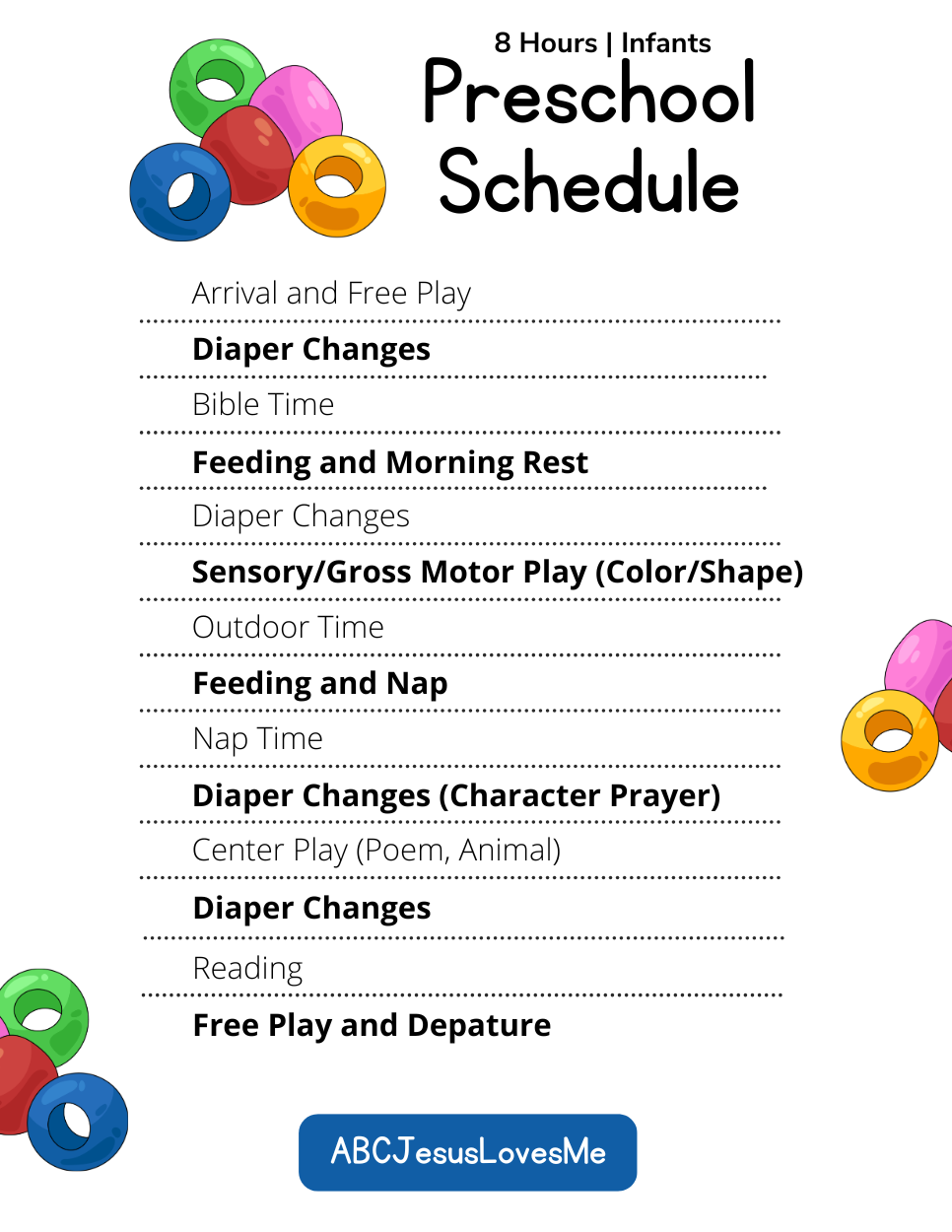
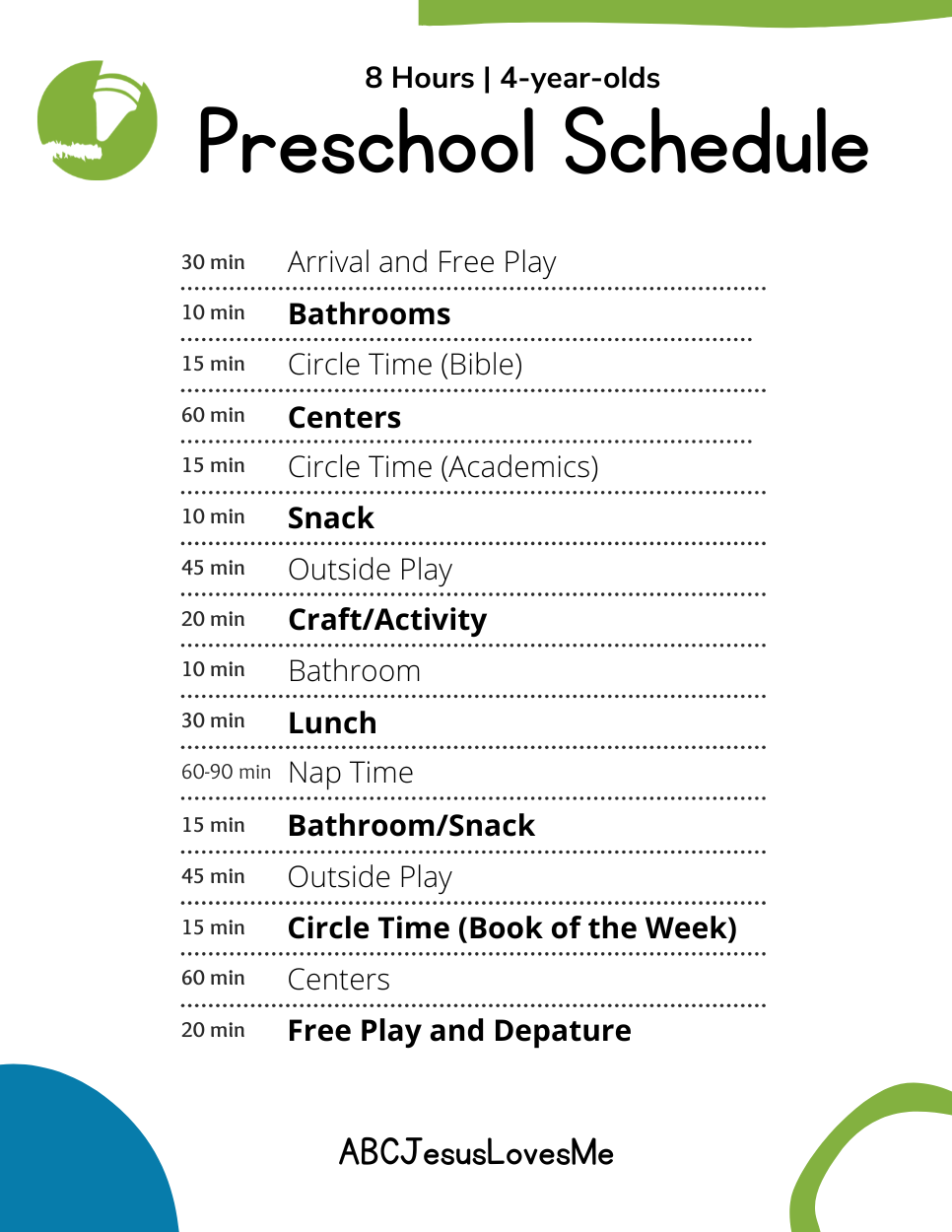
I also encourage teachers to schedule most academic learning in the morning when children are generally the most rested and attentive. Reading books before nap time helps children transition from active play to a calm, restful environment. You can see an example of a daily schedule in the image below.
If you have questions about creating a schedule for your classroom, I'd love to help you brainstorm ideas.
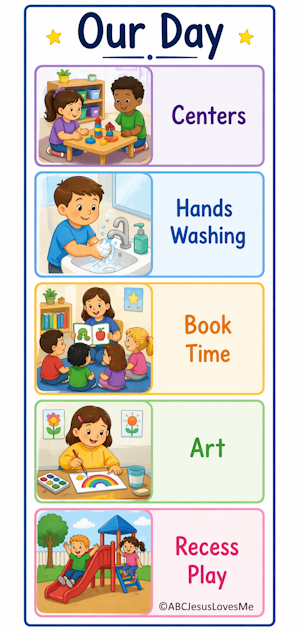
Once you have chosen your classroom schedule, I suggest creating a visual schedule for the students. A visual schedule is a picture-based outline of the day that shows the child what is coming next. Instead of relying only on spoken directions or memory, the child can see the sequence of events—such as arrival, centers, snack, outside play, and story time. This gives structure to the day in a very concrete way and helps turn time into something predictable and understandable.
For many children, especially those on the autism spectrum or those who experience anxiety, a visual schedule can reduce stress, build flexibility, and increase independence. When the child knows what to expect, transitions become smoother and emotional regulation improves because there are fewer surprises. Children also learn to prepare during transitions for the next event (e.g. get their coats to go outside for recess without being prompted). It also supports communication, especially for the child who processes visuals more easily than verbal instructions. Over time, the child begins to follow the routine with less prompting, building confidence and ownership of the day.
To create a visual schedule, start simple. Choose the key parts of the day and represent each one with a clear picture or icon. These can be photographs from your classroom, simple drawings, or printed images like from Canva.com. Place them in order on a strip, board, or wall space where the child can easily see them at eye level. As each activity is completed, the child can physically move or remove the picture, which helps reinforce understanding of “what is done” and “what is next.”
Cover the schedule each day at the morning circle time, discussing any changes or new activities for that day.
Keep it consistent, introduce it gently, and use it daily so it becomes a trusted part of the classroom rhythm.
Gina shares, “Our preschool has been using the ABCJesusLovesMe Comprehensive Preschool Curriculum for about 3 weeks, and I’ve seen such a great improvement in the children and teachers.” Experience the same positive changes in your preschool classroom!
Beginning intentional learning with your child can feel daunting, but you're not alone on this journey. I'm here to help! I offer 30-60 minute training sessions tailored for you, your spouse, or both of you together. Let's meet to help you start strong.
These recommendations reflect developmentally appropriate best practices supported by child development research and widely accepted early childhood guidance. Always follow your state's licensing regulations and Pre-K standards, as specific requirements vary by state.
Research consistently supports providing children with large blocks of uninterrupted child-directed play.
The goal isn't simply more minutes—it's giving children enough uninterrupted time to fully engage in meaningful play.
| Age | Circle Time with Movement | Free-Choice Play | Outdoor Play |
| 1 Year | 3-5 Minutes | Majority of Awake Learning Time | Daily |
| 2 Year | 5-8 Minutes | One or more uninterrupted blocks (45-60 minutes) | Daily |
| 3 Year | 8-12 Minutes | One or more uninterrupted blocks (60-90 minutes) | Daily |
| 4 Year | 10-15 Minutes | One or more uninterrupted blocks (60-90 minutes) | Daily |
| 5 Year | 15-20 Minutes | One or more uninterrupted blocks (60-90 minutes) | Daily |
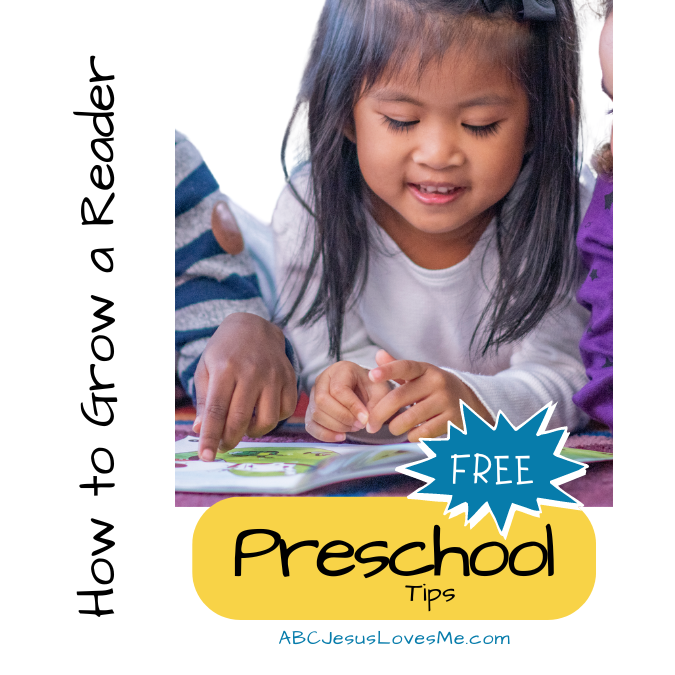
Help your preschooler discover the joy of books with a carefully chosen list of the best books and simple tips to make storytime fun and full of learning. This free packet provides easy ideas to keep your child engaged, grow their love of reading, and build important pre-reading skills—making reading together one of the best gifts you can give!
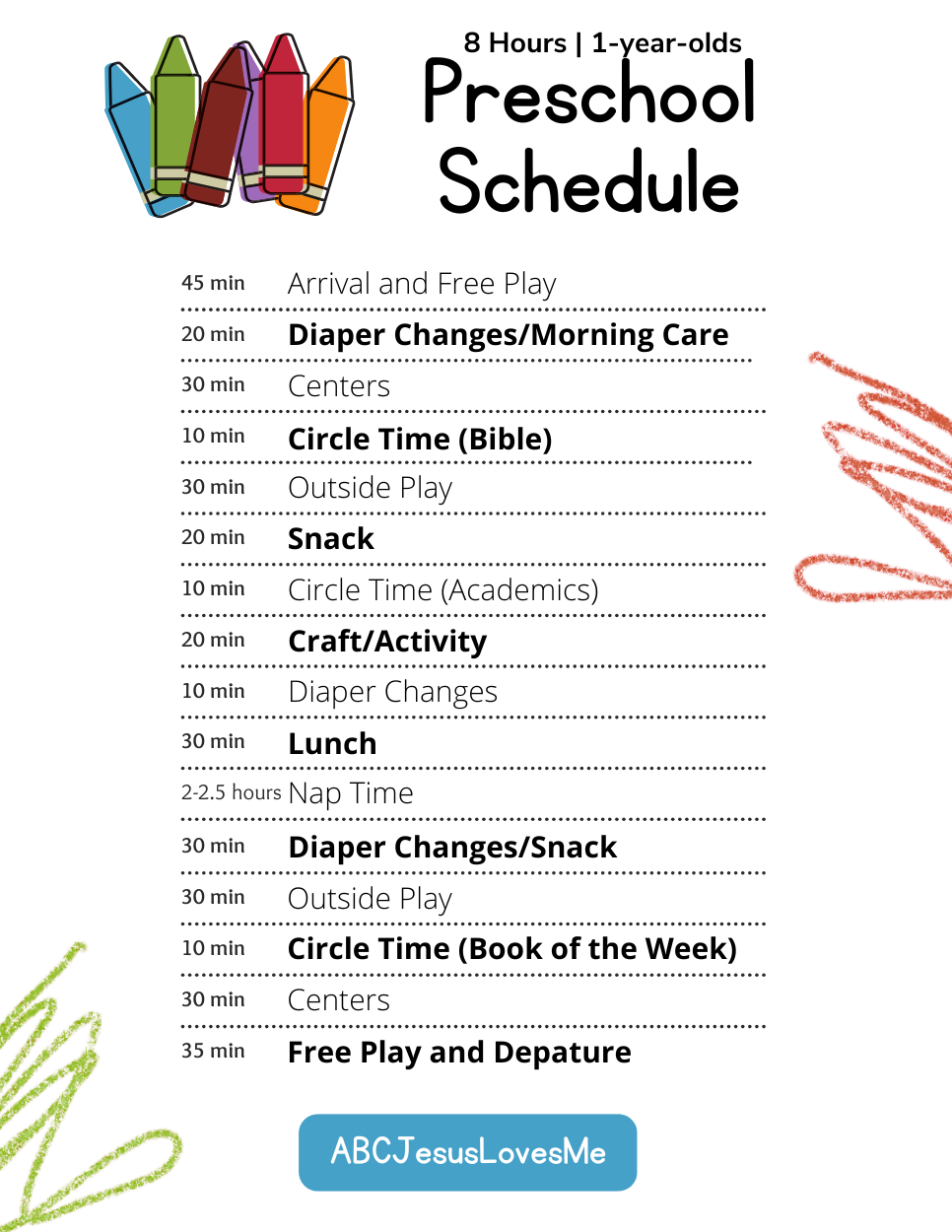
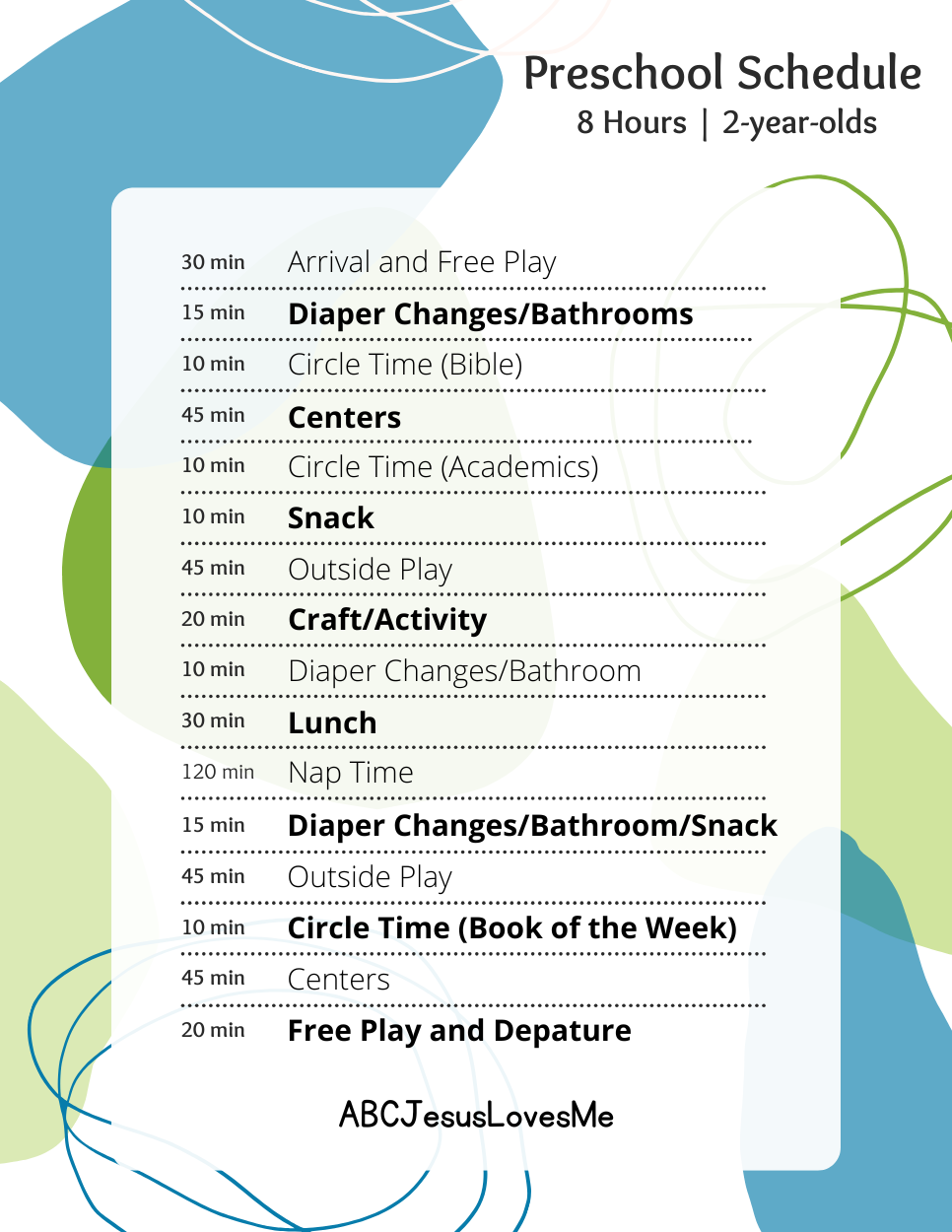
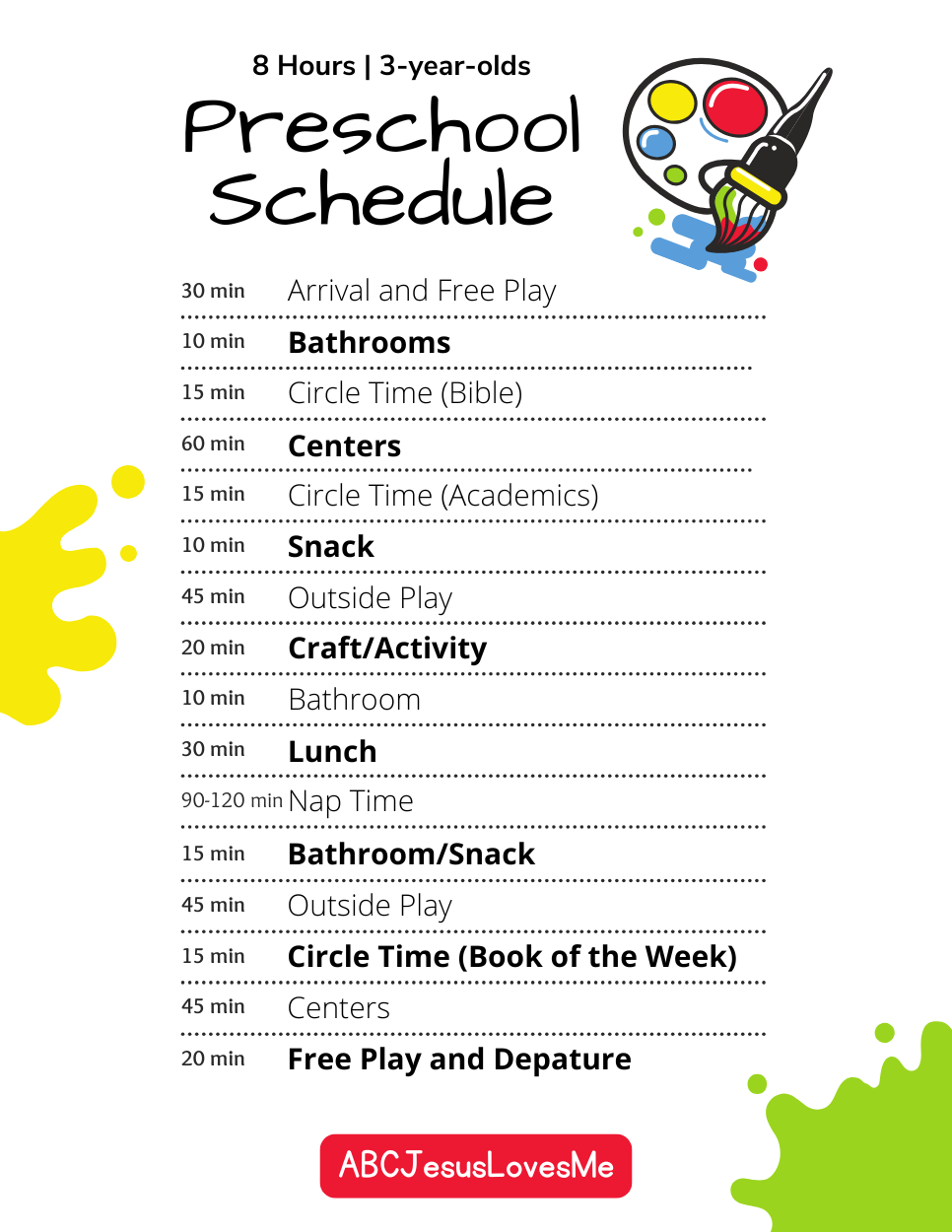
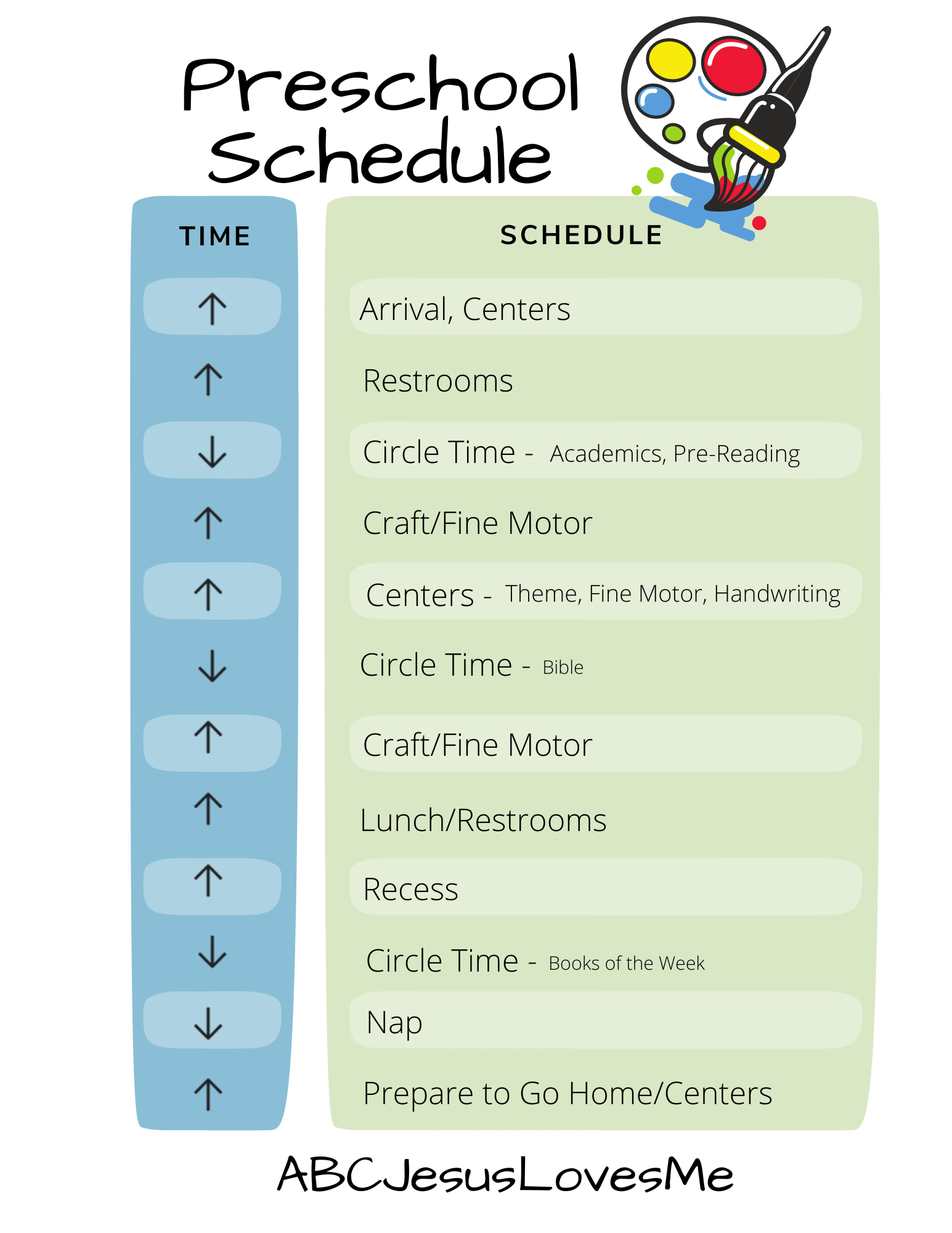
Below are sample schedules by age from preschools using the ABCJesusLovesMe Curriculum. Please remember that state requirements vary, and every preschool has unique needs. Because of these differences, not every schedule will fit every situation. Use the information above and the samples below as a guide to create the schedule that best meets the needs of your program and your students. If you have questions, be sure to reach out to me to brainstorm ideas for your preschool.
Note: Extra time is built into the scheduled circle times to allow toddlers to transition and settle into the activity. For all age groups, gradually increase the length of circle time as children's attention spans grow. Remember that children should never be passive recipients of learning. Keep them actively engaged through songs, movement, questions, hands-on activities, and discussion so learning remains interactive and meaningful.